Get Ready for Your Verbs Quiz: Fun Learning Ahead!
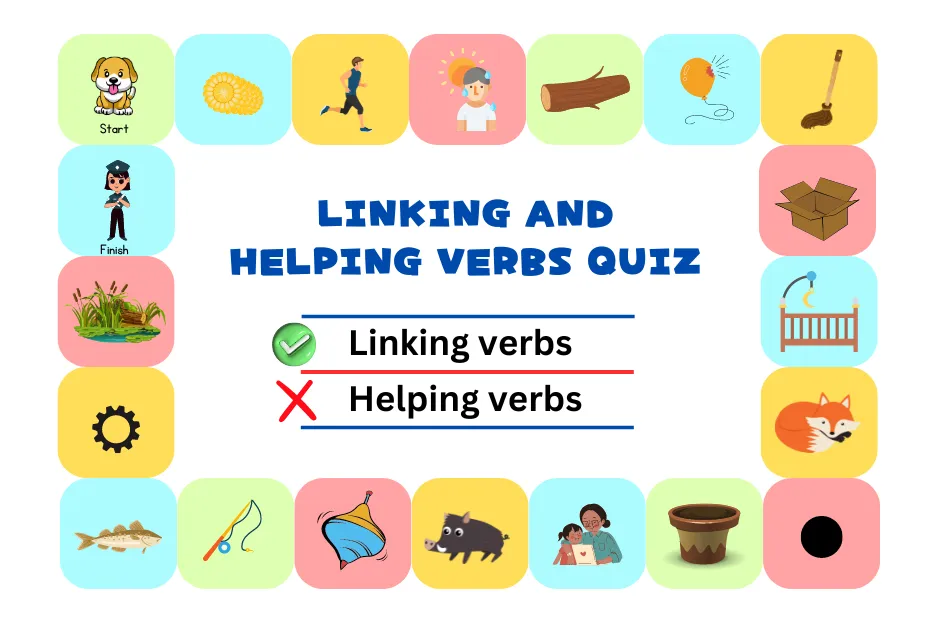
10 Linking Verb(s) quiz in first page, 10 Helping Verb(s) quiz in second page. Let’s start the quiz.

Time's up
Share your result in the comment box
Helping verbs: the quiet sidekicks that change everything
Helping verbs don’t get respect. They’re the small words sitting next to the “real” verb — is, are, was, have, will, can, should — and learners skip right over them. But they carry the tense, the mood, and half the meaning of a sentence. Once I started paying attention to them, my spoken English jumped a level, because these are exactly the words natives blur together fast.
A helping verb (the grown-up name is auxiliary verb) props up the main verb. “She is running.” “They have finished.” “I will call you.” The main verb does the action; the helper tells you when and how sure we are about it.
There are really three families worth knowing. The be family (am, is, are, was, were) builds continuous tenses — “I am studying.” The have family (have, has, had) builds the perfect tenses — “I have studied.” And the modals (can, could, will, would, should, must, may, might) add attitude — possibility, permission, obligation. “You should rest.”
How this connects to linking verbs (and why people mix them up)
Here’s the trap that this quiz is really testing. “Be” verbs do double duty. In “She is running,” is is a helping verb — it’s helping “running.” But in “She is tired,” is is a linking verb — there’s no main verb after it, so it links “she” to “tired.” Same word, two completely different jobs.
My test: look for another verb after it. If there’s a main action verb following, your “be” word is helping. If there’s only a describing word — tired, happy, a teacher — it’s linking. No second verb means linking. I wish someone had told me that on day one; I’d have saved a month of confusion.
The mistake learners make most: dropping the helper in questions and negatives. “You are coming?” becomes “Are you coming?” — the helper jumps to the front. “She has eaten” becomes “She has not eaten.” Lose track of the helper and your questions come out flat and your negatives fall apart.
Try the quiz, then this: take five sentences you’d say today and underline only the helping verbs. Notice how often you reach for “will” and “can.” Which helper do you lean on too much? Mine was “would” — I hedged everything until a friend pointed it out.